Welcome
Welcome to the March edition of our newsletter. Amongst other activities, this month has seen us travel to Japan to talk about the renewal of the Fukushima community, and our Synergy programme. We have also developed our work as part of the peer education programme, Autism Central. We are preparing the next deliveries of SPELL Framework training and of the industry-endorsed Coaching Autistic People through Sport programme. Our focus remains on autistic wellbeing.
Synergy and Wellbeing, Japan
Chris Atkins and Richard Mills were invited by Nagasaki and Fukushima Universities to visit Japan to tour the region impacted by the nuclear disaster and to contribute to the International Symposium on Community reconstruction. Richard had been in the region immediately post the disaster in 2011 and was invited to give impressions of developments and present the recent UK research on wellbeing using the Personal Wellbeing Index (PWI). This research had been undertaken by LSBU in conjunction with the John and Lorna Wing Foundation. The symposium discussed how this might be used as a tool for assessing wellbeing and measuring impact and change. Chris presented on how the Synergy programme philosophy and practice can contribute to community reconstruction and gave feedback on the proposals for the region. Additionally, Richard and Chris attended a day of Synergy follow up at Fukushima University with the team who had undertaken Synergy training at Donaldson’s plus researchers, who have subsequently evaluated the programme in Japan. Synergy is now established in Japan led by AT-Autism associate Prof. Tokio Uchiyama and his team at Fukushima. Prof. Uchiyama is one of the leading psychiatrists in Japan specialising in autism. He trained in the UK with Dr Lorna Wing and Dr Judith Gould.
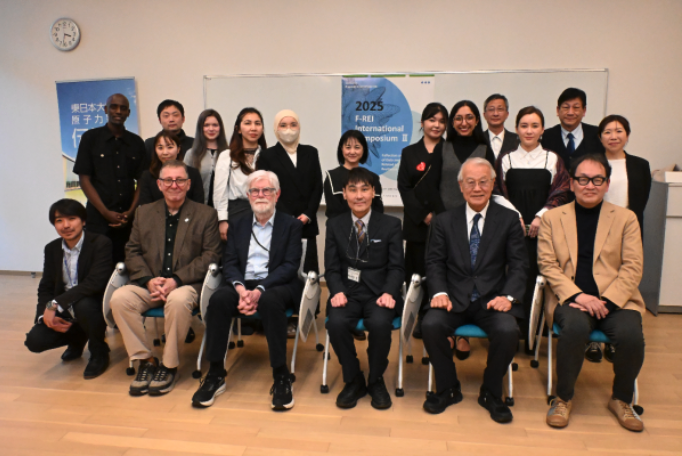
International Symposium contributors
Director’s comment
Ruth Moyse, Head of Training and Co-Production
 A recent interview with Uta Frith on the nature of autism has gained a lot of attention, not least because it arrived on the heels of the SEND White Paper and was published in the Times Educational Supplement. Reading it made me question again how much we think we know about autism, the validity – or not – of different sources of knowledge, and of the narratives we hold about autistic children and young people. What, then, are the implications for their education and support in school, and their futures after school?
Frith’s perspective appears to frame autism as a rare disorder with two sub-groups: one with intellectual disabilities who are diagnosed in early childhood, often with intellectual disabilities and ‘challenging behaviour’, and unsuited to most mainstream education. A second, with ‘fluent language’ and autism characteristics but without intellectual disabilities, would be likely to be attending mainstream education and would probably have been diagnosed with Asperger syndrome before it’s removal from the classification system.
From the article, a teacher may – rightly – understand the value of structure, and clarity of communication and expectations when working with autistic pupils. However, such a deficit narrative will inevitably influence a teacher’s mindset and interaction with that child – to enforce compliance and seek to change them, rather than seek to develop empathy and understanding of their perspective.
As an autistic woman, Frith’s view would erase my place within the autistic community, and that of my autistic daughter and the thousands of others she prefers instead to describe as ‘hyper-sensitive’. Her concern is that the diagnosis has become too ‘stretched’ and too ‘accommodating’ to be meaningful, although it is certainly meaningful to me. She argues that clinicians are perhaps pressurised by parents into decisions, and that they now over-rely on subjective experience rather than clinical observation.
This interpretation negates decades of research since the 1980s and 90s, which has included major work by autistic academics and advocates. Our understanding of autism has evolved over this time, aided considerably by the perspectives of autistic people. We know much more about varied autistic lived experience, of the broader concept of neurodiversity, and how this impacts different individuals and communities. But how widely understood and accepted are these developments in education?
Are lived experiences of autism less important and less valuable than the view of an observer, or is there space for developing a shared understanding? This is critical for the education of an autistic child. Research has shown that some teachers do not, in fact, ‘intuitively know what a child needs’, even with a diagnosis. Support based on a teacher’s interpretation and assessment of need will inevitably be swayed by the prevailing narratives, their biases and their own experiences of the world – we are all human.
Even more reason, therefore, to fully understand the short- and long-term implications for individual autistic children and young people, who are significantly more likely than their non-autistic peers to become persistently absent from school, alongside the associated development of trauma-related and other mental health difficulties.
Research – with and by autistic people – suggests these challenges are not due to mere hyper-sensitivity or to a lack of resilience, both of which frame the problem as an inadequacy within the autistic child. Rather, they feel unsafe, excluded and as though they don’t belong. These reasons must be addressed by school staff, not through slogans but through genuinely inclusive practices, with empathy and compassion, and acceptance of difference.
The article risks narrowing our understanding after a wealth of recent research which has expanded our comprehension, and at a time when there is still so much we do not know. If we want all our autistic children to achieve and thrive, and to grow into adults who enjoy quality of life, then we must continue to explore what this means for them.
Our 2026 conference aims to do just that – save the date, join us and participate.
Save the date: AT-Autism Conference, October 15, 2026, at Church House, Westminster.
Some delegate takeaways from our conference last year: Autism: the art of the possible.“Being part of a space that is changing the narrative. Being inclusive, accessible and thought provoking.”
“It has been an eye opener of Autism beyond a school and classroom setting – as well as a great network opportunity.”
“A brilliant opportunity to tap back into the community of stellar professionals committed to change. I have loved the range of speakers and working across ages, stages and professional boundaries.”
Courses & Services
SPELL Framework
Stage 1 online SPELL training course. This is a 2-day course, with the next event scheduled for Friday 27th March and 10th April. Book here: Stage 1 SPELL Framework training – AT-Autism
Stage 2 SPELL Train the Trainer course. This 1-day in-person course is next scheduled to be delivered on Thursday 9th April, in Reading. Book here: Stage 2 SPELL Framework Training – AT-Autism
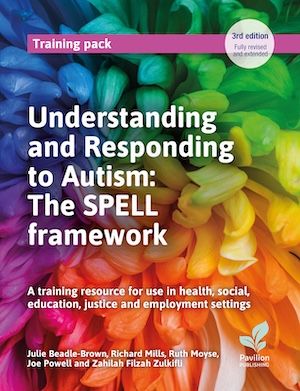
The 3rd Edition of the SPELL Framework is now available to pre-order: Understanding and Responding to Autism: The SPELL framework (3rd edition) Self-study Guide
Synergy Programme
Please contact us at info@atautism.org to book training on the Synergy Programme. This training has a primary focus on the narrative, the practitioner and the culture of a setting – not the ‘behaviour’ of the autistic person being supported. To improve practitioner skills and wellbeing and reduce stress.
Other Services
Click the links for information on the other services we offer:
Autism Central
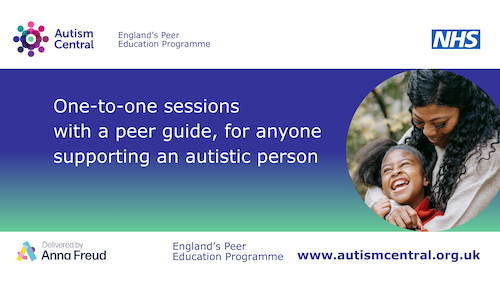
We are pleased to be working with Anna Freud on the Autism Central programme, providing Peer Supervision to the Peer Family Guides. Autism Central is England’s national autism peer education programme, designed to support families and the wider support networks of autistic people. More details here: Autism Central – England’s Peer Education Programme | Autism Central
Peer Family Guides provide one-to-ones which are open to autistic and non-autistic family members of all ages and carers – including parents, partners, siblings, adult children, grandparents, relatives – as well as friends, colleagues, and neighbours. People can have up to 10 sessions with a Peer Family Guide, by phone or video call, and each session lasts for 50 minutes.
Coaching Autistic People through Sport (CAPS)
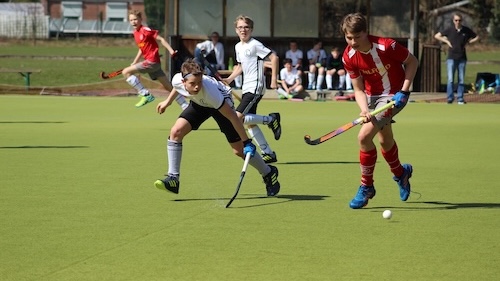
The venue for the next public delivery of the Coaching Autistic People through Sport course, developed in partnership with Strong Path, is the Matrix training centre in Reading on 23rd and 24th April 2026. This CIMSPA-endorsed course provides 10 CPD points. To book a place on these dates click the button below.
To arrange delivery of the course to your organisation, please contact info@capscourse.com