Welcome
Welcome to the July edition of our newsletter, and to all our new subscribers. This month we share the reflections on the Synergy Programme by Edgardo Samson, Lead Synergy Mentor at St Andrew’s Autism Centre in Singapore. Edgardo describes the impact of the training on staff practices, and the importance of the on-going mentoring. The Director’s comment comes from Chris Atkins, who writes about the recently published NHS guidance on “Supporting autistic people and people with a learning disability to live well in their communities”. We share links and feedback on training, including the increasingly in demand SPELL Framework, as well as updates on our important and much-valued work with partners.
The Synergy Programme
Edgardo Samson, Lead Synergy Mentor, St. Andrew’s Autism Centre Singapore
 When St. Andrew’s Autism Centre (SAAC) first embarked on its Synergy journey, we were seeking more than a set of strategies or interventions. We wanted a framework that aligned with our values and supported our vision of providing meaningful, person-centred support to autistic individuals and their families.
What we found in Synergy was not just a programme, but a way of thinking and working that has continued to shape our daily practice and culture.
Over the past year, Synergy Practice has provided our teams with a shared language and a common framework for understanding the autistic people we support. More importantly, it has encouraged us to remain curious and to consciously challenge and reframe how we view ‹behaviours and situations.
Rather than simply asking, “What is happening?”, we have learned to ask, “Why might this be happening, and how can we better understand this individual?”
This shift in perspective has led to many memorable moments. One mentor recalls supporting a learner who frequently became distressed during transitions. Through the Synergy lens, the team chose to focus on understanding the learner’s experience, and made small, contextualised adjustments to the environment and preparation routines. Over time, transitions became less stressful, and what had once been a source of anxiety evolved into opportunities for greater confidence and independence. What changed most was not the learner, but the way we approached his challenges.
Within our Centre of Advocacy and Public Education, which faces external partners and operators of public spaces, Synergy has helped bridge our experience and expertise in supporting autistic people to the wider community. We are better positioned to demonstrate how they can contribute to the wellbeing of autistic people in small but meaningful ways. Concepts such as heuristics and biases have been particularly impactful, reminding us that even small changes in our own perceptions and approaches can profoundly influence interactions and outcomes.
Synergy has also positively influenced the way we work with one another. Our Synergy mentors have started initiatives to keep each another motivated and aligned with our shared values when supporting our beneficiaries. They have introduced monthly inspirational posters, and organised occasional team-bonding activities infused with Synergy principles. What began within one department is now in the process of being adopted centre-wide; reflective discussions and shared problem-solving have also become increasingly embedded in everyday practice.
A year into our Synergy journey, we are reminded that meaningful change does not happen when we work in isolation. It grows through authentic human relationships, shared learning, and a community united by the belief that every autistic person deserves opportunities to thrive.
Together, we look forward to continuing this journey and contributing to a future where autistic people, their families, and those who support them can flourish, and we are grateful to the team at AT-Autism and the wider Synergy community for their support throughout this journey.
For information on modules or to discuss Synergy Training with a member of the AT-Autism team, please visit Synergy Programme – AT-Autism or email info@atautism.org
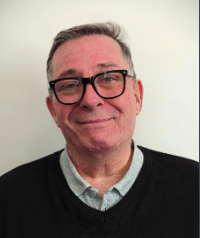
Director’s comment: Chris Atkins, Head of Education, Policy and Social Care
 NHS England have recently published guidance on “Supporting autistic people and people with a learning disability to live well in their communities”.
The guidance sets out a comprehensive framework for how local systems should support autistic people and people with a learning disability to live fulfilling, healthy, and meaningful lives within their communities rather than relying on institutional or hospital-based care. The document is intended for Integrated Care Boards (ICBs), local authorities, education and service providers, housing services, voluntary sector organisations, and community-based health services.
The document builds upon previous NHS England initiatives such as Building the Right Support (2015) and the wider Transforming Care programme. It acknowledges that autistic people and people with a learning disability continue to experience significant health inequalities, poorer physical and mental health outcomes, and disproportionate risks of crisis, exclusion, and hospital admission.
A central argument is that these inequalities are not primarily a consequence of individual impairments but arise from failures in systems, services, accessibility, and coordination. Effective support therefore requires a whole-system, cross-sector response involving health, social care, education, housing, justice services, and the voluntary sector.
The report establishes a clear expectation that autistic people and people with a learning disability should be supported to live well in their communities through coordinated, rights-based, neuro-affirming, and person-centred systems of support. It reinforces a strategic shift towards prevention, inclusion, co-production, and community-based care, while positioning health, housing, education, employment, and social participation as equally important contributors to wellbeing and quality of life.
We applaud the sentiment – but given the miserable track record of effective implementation (Autism Act anyone?) remain sceptical as to its ultimate impact. We hope we are wrong…
Our courses and services: Training
SPELL Framework Training
Ruth Moyse, Head of Training and Co-Production, explains why she thinks the SPELL Framework is so effective in helping people understand autistic people and support them to thrive:
‘As a parent and teacher, I love that the focus of the SPELL approach is on what we can do to support autistic people to thrive. The approach is hopeful, ethical and practical. It does no harm. It’s a framework, not a manual, which enables us to focus on the strengths, interests and differing support needs of individuals.
As an autistic person, I love that SPELL doesn’t try to change or ‘fix’ autistic people. The framework is concerned with understanding autism; with promoting autistic wellbeing whilst addressing difficulties; with supporting autonomy and providing opportunities. Critically, this is done by developing empathy for the autistic experience.’
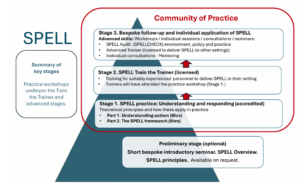
SPELL training progression summary
Stage 1 SPELL training course. Stage 1 is a 12-hour (6 hours x 2 days) CPD-accredited foundation course. It is suitable for all practitioners working with autistic people of all ages, across multiple settings. This SPELL practice workshop covers an understanding of autism, considers the principles and five domains of SPELL, and reflects on applications of the framework to individual practice.
Recent feedback from delegates included:
“Session was very insightful. Found it useful discussing framework and techniques.”
“Loved the visual ideas and strategies and the clear breakdown of the framework and information”
“Great insight and love the real life/ lived examples that support CYP”
The next online delivery dates for SPELL Stage 1 are 11th and 25th September 2026.
For more information and to book your place on the next online course, please visit: Stage 1 SPELL framework training – AT-Autism
To discuss onsite delivery of SPELL training for your organisation, please email info@atautism.org
Stage 2 SPELL training is a 6-hour Train the Trainer course, which we delivered online for the first time this month. The cohort was international, with delegates attending from as far afield as Canada. Whilst this brought a few challenges (starting training at 2 am for one person!) and required some adaptations, it was a fantastic day. In particular, the group work sessions and discussions came alive with perspectives and experiences shared from different countries and cultures. Everyone engaged enthusiastically with the materials and activities, and left with a commitment to stay in touch – breaking barriers to connection, despite not being in the same room (or country!)
Feedback included 100% of delegates saying their expectations of the training had met or exceeded expectations, with particular appreciation for the facilitated discussions and activities.
“I really like the fact that it is a simple and flexible framework. I see it as very useful and hopefully impactful.”
The 3rd Edition of the SPELL Framework is now available to pre-order: Understanding and Responding to Autism: The SPELL framework (3rd edition) Self-study Guide
The 3rd Edition of the SPELL Framework is now available to pre-order: Understanding and Responding to Autism: The SPELL framework (3rd edition) Self-study Guide
Synergy Programme
This practical training aims to reduce stress, improve staff skills and support wellbeing. In this, the primary focus is on the narrative, the practitioner and the culture of a setting – not the ‘behaviour’ of the child or adult.
An independent evaluation of the Synergy Programme by the University of the Peloponnese (Bagakis and Koulis 2023) found: –
- Settings became more inclusive – with increased capacity.
- Positive change in narrative and culture.
- Reduced stress in professionals and increased wellbeing.
- Increased professional competence, confidence, empathy, listening and communication skills.
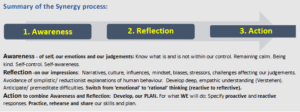
To discuss Synergy training for your organisation with a member of our team, please email info@atautism.org.
Bespoke Training
We offer bespoke training on Autism, ADHD and Neurodiversity, designed with you to meet the needs of your team, based on the specifics of your setting, and fitting with your budget and available time. These courses are always co-designed and co-delivered, with an emphasis on engagement, interaction and reflection.
Feedback from delegates on recent ADHD course:
‘Well delivered training with a good structure and amazing time keeping.’
‘Really enjoyed the movement breaks and different types of activities.’
‘It was a lovely mix of theory and practical activities- very engaging.’
To discuss your training needs with a member of our team, please email info@atautism.org.
Click the links for information on the other services we offer:
Working in partnership
Autism Central
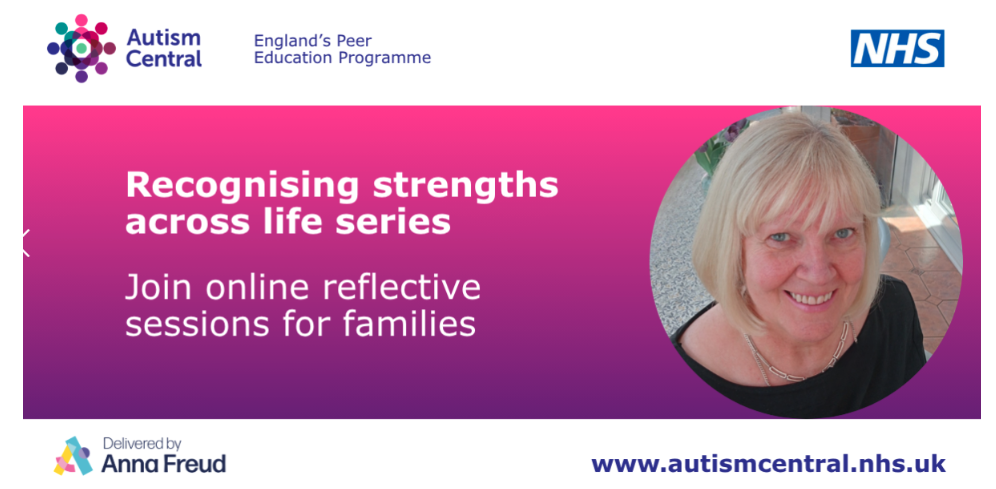
Autism Central is England’s NHS-funded national autism peer education programme, designed to support families and the wider support networks of autistic people. More details here: Autism Central – England’s Peer Education Programme | Autism Central
We are pleased to be working with Anna Freud on the Autism Central programme, providing supervision, training and support to the team of Peer Family Guides, as well as Masterclasses and Group Reflective sessions directly to family members and carers. Linda Woodcock is currently facilitating a series of weekly reflective sessions on ‘Recognising strengths across life’. Her next series, ‘Relationships across the lifespan’, begins on 12th August.
For more details on Autism Central events, and to book a free place: Group learning for families of autistic people | Autism Central
Autism Europe
 Our Head of Research and Clinical Support, Richard Mills, has been appointed co-chair of the Autism Europe working group for autistic people with high support needs. He currently shares this with Hungarian colleague Zsuzsanna Szilvásy.
The working group will be looking at developing guidance covering all aspects of support including long term. As an initial step, Richard will be reaching out to parents, carers and supporters for their perspectives.