Welcome
Welcome to the September edition of our newsletter, and to all our new subscribers. This month we share reflections on a recent report on premature deaths, a comment on autism and AI, and updates on some of our current work.
Directors Comment: Preventable and premature death rates
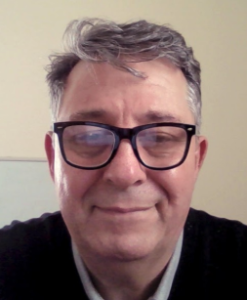
Chris Atkins, Head of Education
 Another sadly familiar report on avoidable mortality and premature death rates for adults with learning disabilities was published online ahead of print last month.
To the growing data on this topic, we can now add the conclusion that those adults described as having severe/profound learning disabilities die 24 years earlier than the general population, with 40% of deaths considered avoidable. That is 2 in every 5 – an appalling high rate.
Although the study focused on intellectual disability rather than autism specifically, the findings have important implications for autistic people and the wider neurodivergent population – we know roughly one-third of autistic people are estimated to have a co-occurring intellectual disability2, although of course, prevalence varies depending on diagnostic criteria and age group3.
 The study is yet another reminder that premature mortality among people with intellectual disabilities remains a significant public health and human rights issue. For those of us working in the field, the findings reinforce the need to move beyond individualised interventions towards actual, effective systemic reform. Preventable deaths are often indicators not of individual vulnerability alone, but of shortcomings in healthcare accessibility, equity, and responsiveness. 40% of deaths being avoidable is a figure that is simply not defensible in any contemporary society. That this is somehow accepted in some quarters is unforgivable. We must do better. On this, we commend the work of Prof. Sara Ryan and her important ‘Social Murder’ initiative.
1. Yu, M.K.L., Sheehan, R., Magill, N., White, A., Bokor, L., Ding, J., Tuffrey-Wijne, I., Chauhan, U. and Strydom, A. (2026). Avoidable mortality, clinical outcomes and determinants of premature death among adults with severe or profound intellectual disability: A population-based analysis of mortality data in England. PLOS Medicine, 23(8). https://doi.org/10.1371/journal.pmed.1005029
2. Zeidan, J., Fombonne, E., Scorah, J., Ibrahim, A., Durkin, M. S., Saxena, S., Yusuf, A., Shih, A., & Elsabbagh, M. (2022). Global prevalence of autism: A systematic review update. Autism research: official journal of the International Society for Autism Research, 15(5), 778–790. https://doi.org/10.1002/aur.2696
Kinnear, D., Rydzewska, E., Dunn, K., Hughes-McCormack, L. A., Melville, C., Henderson, A., & Cooper, S. A. (2019). Relative influence of intellectual disabilities and autism on mental and general health in Scotland: a cross-sectional study of a whole country of 5.3 million children and adults. BMJ open, 9(8), e029040.
Director’s comment: Autism and AI
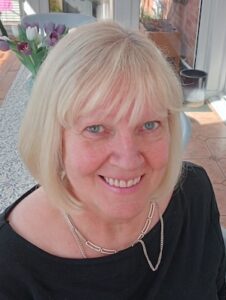
Linda Woodcock, Head of Families and Support
 In a month where AI has been constantly in the headlines, with dire warnings of the extinction of the human race sitting alongside the opportunities for a revolution in the medical world, I realised that my ignorance around the subject needed to be addressed. It started me thinking about AI and its uses around autism. So, I took the plunge and I fired up my AI assistant (yes, I have one but have no idea how it appeared) and typed in AI and autism. Clearly, I have come to the party very late on this as a huge number of articles and research papers were identified.
The consensus seems to be that great strides are being made in the field and the development of personalised learning platforms and tools, widening access to information for individuals and families and tools to assist with everyday living seem to be some of the main themes. However, there is also a consensus which is emphasising the need for ethical safeguards, transparency, and collaboration with autistic individuals to ensure that AI systems are designed responsibly and inclusively.
I intend to continue my AI education and hopefully I will feel better able to join in the conversation.
Our courses and services: Training
Synergy Programme
This practical training aims to reduce stress, improve staff skills and support wellbeing. In this, the primary focus is on the narrative, the practitioner and the culture of a setting – not the ‘behaviour’ of the child or adult.
The independent evaluation of the Synergy programme in Greece is ongoing via the University of the Peloponnese, Greece. This continues to have a positive beneficial impact on schools in Greece, reducing staff stress and improving outcomes for children.
We have delivered Synergy to practitioners across a range of different settings now, including inpatient and community healthcare services, and health and justice settings. Most recently, we delivered this 6-hour course online over two mornings, separated by a fortnight, for specialist healthcare staff working in the NHS across multiple locations in England. All delegates said the training fully met or exceeded their expectations, with all aspects seen as useful:
“Hard to pick out specific areas, as all parts made me reflect and consider how I can apply in my work. The aspects of judgement, beliefs, and bias affecting our practice really impacted to consider in my practice.”
Delegates shared examples of what they were going to change in their practice as a result of the training, e.g.:
“Take time, slow down, and take control of how I respond, behave and react. Really consider being present, and control myself.”
Overall feedback included comments on the value of the training on a personal as well as a professional basis, and the view that this programme should be implemented across the NHS workforce:
“Really enjoyed the session, very informative and related to clinical practice, but also to ourselves. It provided me with the opportunity to reflect on situations I have been in that have affected me emotionally and impacted ongoing relationships in my previous role.”
“Share it far and wide in the NHS! I feel very lucky to have received this training.”
For more information on the Synergy programme or to discuss Synergy training with a member of the AT-Autism team, please visit Synergy Programme – AT-Autism or email info@atautism.org
SPELL Framework Training
The SPELL framework offers a values-based, practical and evidence-informed approach to supporting autistic people. Originally designed for use by staff in schools, the framework has since been successfully applied in health care, social care, and justice settings, for practitioners working with autistic people across the lifespan. We have just finished editing the revised materials, which will soon be available via Pavilion Publishing.
“I truly feel this framework needs to be shared with more schools and environments where are children and young people attend – so their needs can be better met. This framework gives supporting adults the opportunity to reflect on current practice without judgement, which will always have more buy-in and lasting impact and benefits for our young people.” Delegate, Ireland.
Stage 1 SPELL training course. Stage 1 is a 12-hour CPD-accredited foundation course. It is suitable for all practitioners working with autistic people of all ages, across multiple settings. This SPELL practice workshop covers an understanding of autism, considers the principles and five domains of SPELL, and reflects on applications of the framework to individual practice.
“I enjoyed the level of challenge in the tasks in breakout rooms – I thought they provoked really powerful discussion.”
Stage 2 SPELL training course. Stage 2 is a 6-hour CPD accredited Train the Trainer course, which prepares participants to deliver the SPELL framework within their own organisation.,
To discuss delivery of SPELL training for your organisation, onsite or online please email info@atautism.org.
The 3rd Edition of the SPELL Framework is now available to pre-order: Understanding and Responding to Autism: The SPELL framework (3rd edition) Self-study Guide
Bespoke Training
We offer training on Autism, ADHD and Neurodiversity, designed with you to meet the needs of your team, based on the specifics of your setting, and fitting with your budget and available time. These courses are always co-designed and co-delivered, with an emphasis on engagement, interaction and reflection.
Bespoke training can also be commissioned. Current examples from school settings include online twilight sessions at a series of staff meetings, and a workshop to understand and reduce non-attendance at school.
To discuss your training needs with a member of our team, please email info@atautism.org.
Other Services
Research and Evaluation
Our repeat evaluation of the Middletown Autism Centre has resumed and will be conducted over the coming months.
The evaluation of the support services offered by Donaldson’s, the National Body for Neurodiversity, continues.
Evaluation of the Inspire Malta Services continues. Their LinC programme, for children who have been excluded from mainstream provision, is showing significant impact for children and families. Their ground-breaking Pathfinder programme offers a novel model of ensuring timely and appropriate support
Autism Consultancy
Training for Higher education staff in Malta is about to commence, working in conjunction with the Inspire Foundation and University of Malta.
Working in partnership
Autism Central
Autism Central is England’s NHS-funded national autism peer education programme, designed to support families and the wider support networks of autistic people. More details here: Autism Central – England’s Peer Education Programme | Autism Central
We are pleased to be working with Anna Freud on the Autism Central programme, with Linda Woodcock and Ruth Moyse providing supervision, training and support to the team of Peer Family Guides, as well as Masterclasses and Group Reflective sessions directly to family members and carers.
One-to-one support
 Peer Family Guides provide one-to-one peer support to autistic and non-autistic family members of all ages and carers – including parents, partners, siblings, adult children, grandparents, relatives – as well as friends, colleagues, and neighbours of autistic people.
Peer coaching is a supportive, non-judgemental conversation where you can:
-
Talk openly about your experiences.
-
Reflect on challenges and successes.
-
Explore different perspectives.
-
Build confidence in your own decisions.
-
Develop practical ideas and options for next steps.
-
Share concerns with someone who understands through lived experience. Receive information, resources and signposting where appropriate.
“Feeling listened to. Space to reflect, thought provoking – I had two “lightbulb” moments as a result of the peer guide’s insight.”
You can access up to ten, 40-minute sessions to explore a particular topic. Sign up for your free sessions here: One-to-one | Autism Central
For more details on Autism Central events, and to book a free place: Group learning for families of autistic people | Autism Central
Research participants wanted: help shape the future of peer support for families
Are you 18+ and a family member of an autistic person of any age? UCL researchers, led by our AT-Autism Associate, Georgia Pavlopoulou, at the Group for Research in Relationships And NeuroDiversity (GRRAND) would like to hear from you. This includes parents, carers, siblings, partners and other adult family members of diagnosed or self-identified autistic people of all ages who may also be ADHD (AuDHD) and/or have a learning disability. More: Help shape the future of peer support for families | Autism Central
Autism Europe
Our Head of Research and Clinical Support, Richard Mills, and Zsuzsanna Szilvásy of the MARS Autism Foundation Hungary have been invited to co-chair the Autism Europe working group on autistic people with high support needs. This is in the context of Article 12 CRPD and supported decision making. The group is now underway and currently reviewing evidence that will form guidance on this topic.
Separately, Richard, and Ruth Moyse (Head of Training and Co-production), are part of an international team working on a new Autism Guide for Autism Europe. This guide is designed for autistic people, their families and the wider community. It will include information on identification, and recognition of the diversity of autistic people with varying strengths, challenges and support needs. Importantly, this Guide promotes a focus on the wellbeing of the autistic person and encourages understanding autism through curiosity and empathy. We anticipate being able to share the final Guide in April 2027.
The Donaldson Trust
 As part of our continued partnership, our Head of Training and Co-Production, Ruth Moyse, is working with Louise Storie (pictured) and a team of staff and young people at The Donaldson Trust to co-produce a version of the Synergy programme for young people. This will be called ‘Synergy Switch’. More details to follow, as the project develops.
‘Listening to, responding with compassion, and understanding young people’s experiences is at the heart of the work we do at The Donaldson Trust. We are excited to collaborate with young people to develop a programme that is designed and produced with them, representing what is important and what can make a difference when they experience stress or distress.’ Louise Storie.
Restraint Reduction Network
Our Head of Research, Clinical Support and Programme evaluation, Richard Mills has been invited to give a keynote talk on Synergy programme, and a workshop on de-escalation at the Restraint Reduction Network conference in Newcastle-upon-Tyne on 3rd and 4th November.